Wednesday, 30 December 2015

** No Signal Sound Mix #4: Outerstellar Entanglements **


** To download the mix click here **

A special mix for the coming year.

Welcome into the world Eva, Solal and Rosa.

xxx

Tracklisting:

1. The Shanty Men - 'Rio Grande' from The Shanty Men LP, 1978
2. Laurel Halo - 'Situation' from In Situ EP, 2015
3. Unknown Artist - '???' from the soundtrack to Margot Benacerraf's film Araya, 1959
4. Bob Marley & The Upsetters - 'Mr. Music' 7" single released by Pressure Sounds, 2013
5. Rian Treanor - 'A1' from A Rational Tangle EP, 2015
6. Peggy Seeger - 'Henry Lee' from Peggy Alone LP, 1968
7.  Wiley & Zomby - 'Step 2001', 12" single, 2015
8. Burning Spear - 'Black Wa-Da-Da' from Garvey's Ghost LP, 1976
9. Aisha Orazbayeva & Tim Etchells - 'The Answer to Your Question' from Seeping Through, 2015
10. Kendrick Lamar - 'Momma' from To Pimp a Butterfly LP, 2015
11. The Blind Boys of Alabama - 'Lift Me Up (Like a Dove)' from The Gospel at Colonus LP, 1988
12. Billy Strayhorn - 'Lush Life', recorded at Basin Street East, New York City, January 14, 1964
13. Maxta, Boothroyd and Maniac 'No Retreat' from 100 Problems EP, 2015
14. Tim Buckley - 'Jungle Fire' from Starsailor LP, 1970
15. Eek-A-Mouse - 'Set 1' from Junjo Presents A Live Session LP, 1982
16. Sandra Kerr - 'My Husband's Got no Courage in Him' from The Female Frolic LP, 1968
17. Miriam Makeba - Two songs from Lionel Rogosin's film Come Back Africa, 1959
18. Ken Parker - True True True (Adapted) 12" single, 1979
19. Bob Dylan - George Jackson (Acoustic Version) 7" single, 1971
20. Rico - 'Africa' from Man From Wareika LP, 1976

Monday, 16 November 2015

** No Signal Sound Mix #3: No Signal Sound X Nawal El Saadawi **


Tracklisting:

1. Kalpana Improvisations
2. Steve Reich - Six Marimbas
3. Peggy Seeger - Henry Lee
4. Reshma - Lambi Judaii
5. Charles Keeping - They're Moving Father's Grave to Build a Sewer
6. Miles Davis - Right Off (Excerpt)
7. Beach Boys - Solar System
8. Rico - Africa
9. Los Gaiteros De San Jacinto - Maria Sola (Dub Mix)
10. Take Us Home - Danny Tucker (Dub)
11. Prince Allah - Their Reward (+ Dub)
12. Lopez Walker - Send Another Moses
13. Symbols - Misunderstanding (+ Dub)
14. Tyrone Taylor - Life Table (Dub)
15. Captain Beefheart - Floppy Boot Stomp
16. Sheffield Industrial EP I bought off Dangergirl at a car boot in Battersea that I can't remember the name of.
17. Prince - Sign of The Times
18. Michael Jackson - In The Closet
19. Beyonce - Haunted
20. Lectroluv - If We Try (Ambient Dub)
21. Key Tronics Ensemble - Calypso of House (Paradise Version)
22. Dj Sprinkles & Mark Fell - Fresh
23. Shackleton & Ricardo - Blood on my Hands
24. Ricardo Villalobos - Black Conga
25. Oni Ayhun - OAR004-A
26. Chugga - Theme For The Buck Rogers Light Rope Dance (Shinedoe Remix)
27. Hank Jackson - Deposit
28. Bob Dylan - George Jackson
29. Francoise Hardy - La Maison Où J'Ai Grandi (Il Ragazzo Della Via Gluck)
30 - Tyrone Taylor - Life Table

Friday, 3 July 2015

** No Signal Sound Mix #2: Sunday Service #1 ** Bionic & The Politics of The Unnamed Mix **


          On Atlantic Road in Brixton, two doors down from Simply Fabric and next to Shaza Chicken, Bionic can be found most days sitting in his booth, a space just about big enough for two people to sit in (i've only ever seen him share the space once and that was with his wife...) Bionic has been on Atlantic Road for decades, he told me last year that Atlantic Road and the joining Railton Road used to be known as The Front line, a place where people would sit out day and night listening to music being blasted out of speakers up and down the stretch. In the 80's, Bionic worked with Front Line Sound, a south London reggae soundsystem, recording dances and distributing his recordings on cassettes to the local community from his spot on Atlantic Road.

        Today Bionic sells reggae compilations on CD-R's - they're the best compilations you'll ever buy. Taken from a number of huge CD wallets he brings up from beneath his feet in the booth, the man will play you tracks from the hundreds of compilations he's made for you to decide which ones you like best. The style is strictly soundsystem, with Bionic working the EQ's and singing along as he goes, waving to the locals as they pass by. Over the past three years, the price for mixes has stayed at 3 for £10 - more for the specials, which are kept on the top shelf above the proprietor's head and are comprised of tracks that are especially rare and impossible to find anywhere else. The CD's might have "£20 Exclusive" or "Rare Dubs" written on them in permanent pen but most of the time Bionic will do you a good deal on the more expensive ones. Once you've decided which ones to take, you go away for 15 minutes while Bionic makes you copies from his originals, marks them up and puts them in their plastic wallets ready to take away.


Bionic's 'Roots 127' mix

        Bionic has given me the best introduction to reggae I could ever hope for. No book, blog or commercial compilation could ever come close. The quality of tunes i've heard over the thirty or so CD's i've bought so far has been consistently amazing, pretty much all completely new to my ears and as i'm now finding out - a lot of the music is incredibly hard to come by. These tracks are not on youtube, unlisted on discogs, untraceable by shazam - not even discussed on reggae message boards where people post fragments of lyrics in the hope that somebody will be able to identify the tune they come from - they're black holes in the bright white atmosphere of the digital age. On 'Roots 127' for example, of the 19 tracks, i've only been able to find out what 11 of them are, i've hit a brick wall on the remaining 8 and only a miracle is going to shed light on them.

        Bionic's compilations raise an important question though: What are the implications of valuing the sources of our art? Not knowing any of the artists, or any of the track names didn't decrease my enjoyment in listening to my first Bionic mixes a few years back, headphones on, cycling from Brixton to Brockley in the soft early morning summer heat. Bionic's unmarked mixes can be said to put us in a place of unanchored Godliness, closer to the music, liberated from the imposing influence of the recognisable and recognised producers of sound, some of whom have disappeared into the dust whilst others having become cultural totems, subsuming the light and energy of their fellow creators by way of the damaging external influences of the commercialization of their art as cultural product. This phenomenon is one felt in art galleries worldwide, as visitors can be seen literally running to works of art by more established names, not even glimpsing, let alone stopping for a moment to comprehend, works by 'minor' artists of which they had rushed past, on the pathway to the totems.


The horror of the spectacle of the Mona Lisa

       In Lloyd Bradley's amazing book on the history of Jamaican Music in the 20th Century, 'Bass Culture', the author argues that this was certainly the case with Bob Marley. Upon his death in 1981, key record labels (operating largely outside of Jamaica) exerted a huge amount of pressure on Jamaican musicians to deliver a 'new figure' - a singularity by which reggae-music-as-product could continue to be sold worldwide as an understandable and easily-assimilated cultural product. This, Bradley argues, had a detrimental effect on the culture itself, as innovation and originality became side-lined in order to secure commercial success in a country suffering sustained poverty and socio-political instability throughout the period. Lee Perry's cover to his 'Judgment In A Babylon' single, released the same year as Marley's death, puts the point across razor sharp. In it, Island Records boss Chris Blackwell quite literally, has become a vampire.


Lee 'Scratch' Perry's Judgement In A Babylon / One Drop, 1981

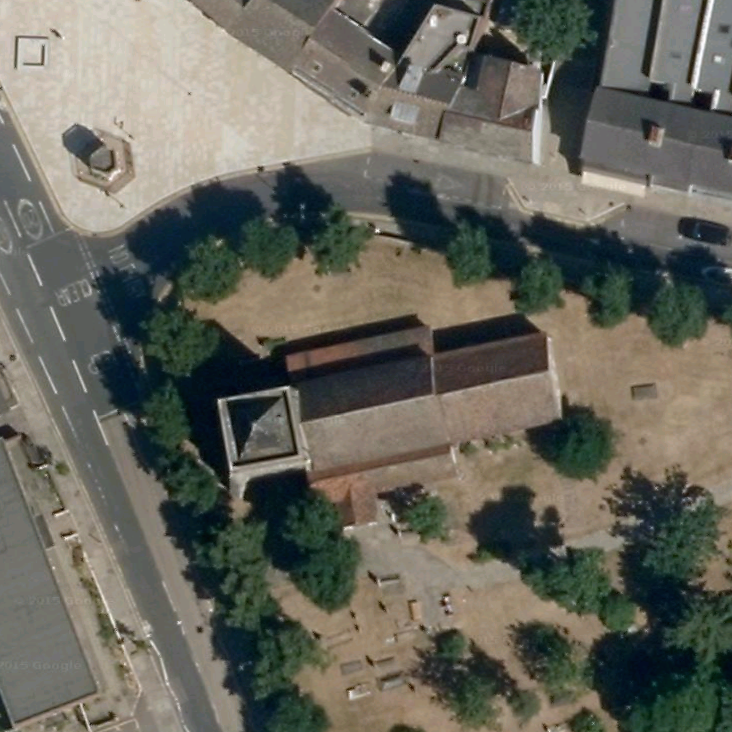
       So, in tribute to Bionic, this latest mix, alongside all others on this blog, will go out with no tracklisting. I hope that this form will capture the excitement and disorientation i feel whenever i listen to a new Bionic mix. The decision to not list artists or track names doesn't reflect a belief that understanding where art comes from has no value, it's more a matter of using form to attempt to question how cultural knowledge is used and abused in the social environment in which we find ourselves. I chose these tracks with Sunday morning in mind - that's the church opposite my bedroom window on the cover - good music is God's music so enjoy and next time you're down in Brixton, make sure you go and visit Bionic!

Tuesday, 23 June 2015

** Welcome ** Wong Kar-wai and Dub Reggae ** No Signal Sound Mix #1: Essex Field Vibrations **


Hello and welcome to No Signal Sound.

Collecting records and owning two turntables fills your head with ideas. The more records you buy, the more you come to realize the potential of each one to speak to another and collectively, to weave more detailed narratives that can only ever stay partly within your control. This partly is the magic part of the equation, and why it is magic itself to share the 'maths' of the mix. We know that sound can't belong to anyone. It just is. Bubbling up, constantly transforming and always finding its way through the narrowest of gaps. Whether seen in the hardcore Japanese fan-base Blur enjoyed during their 'quintessentially British' Parklife era, Kraftwerk's huge Indian following in the 70's and 80's or my two Mexican cousins' obsession with K and J-pop it is clear that human engagement with sound is chaotic. No rules, no guiding principles, no logic, no signal, just sound. 

I have set up this page to invite you into the growing dialogue which exists between my record collection and myself. I hope you like it. Feel free to put your email address into the box at the top of the page to be notified when new mixes are ready.

My first mix is called "Essex Field Vibrations". It is mostly comprised of dub reggae tracks I have found at car boot sales in Essex over the past couple of months. Cycling 15 miles at 5am can be really painful but when you find a Prince Allah 7" for £1 or a Jamaican DJ-only pressing of King Tubbys Meets Rockers Uptown for 25p, it really does feel like there is a God.


The Gateway To Heaven (Or Hell)

A moment that comes to mind which defines this mix and to a large extent defines my thoughts on the power of dub reggae, came whilst I was watching Wong Kar-wai's 'In The Mood for Love' a few years back. In the film's final sequence, we follow Tony Leung's character as he visits the ruined monasteries of Angkor Wat, whispering the secret of his lost love into the ancient walls before covering it over with a clump of soil and turning to leave...

I've seen this closing sequence countless times before but this time around i'd spent the previous few months listening to dub reggae non-stop after picking up my first of many CD-R compilations from Bionic on Atlantic Road in Brixton (more information on him later!) Nonetheless, the music had clearly made its way deep enough into my subconscious to refract the meaning of those beautiful, arching stone corridors which the great director's camera tracks out of, peering up into them like a disbelieving child. In the film, the time is crucially of an indeterminate dusk or dawn, and in this incredible sequence, Wong Kar-wai, as he has done so many times, manages to express the ability of human loss, absence and dislocation to obliterate any conventional notion of time within a person's life. On-screen, everything echoes. A single boulder assumes the same scale at a temple, ancient walls seem designed to accommodate the secrets of the modern man and arching doorways dissolve limitlessly into new doorways. Time has slowed to a halt. Form is quietly deformed. A boulder is worth as much as a temple and a corridor as much as a doorway. Even in this 'heritage site', the original and the 'version' are almost impossible to differentiate. And this is where Bionic's dub reggae compilations came in...


The Boulder/Temple Paradox

Dub is largely about space. It is also about reduction. The vocals are largely gone. The terrain of a dub track is scattered with echoes, reverb and delay and it becomes a holding space of potentialities, for remnants of the 'original' to return as well as for new, unexpected elements to be introduced. It is the sound of 'successive time' caving in. Watching 'In The Mood For Love' back then, it also felt like a reflection of successive meaning dissolving - just as Wong Kar Wai's contemporary man dislocates himself from his motherland (a mid 60's Hong Kong itself under British colonial rule) in order to find spiritual renewal, a dub track in its very design lays itself open to interventions in the mind of the listener as much as the musician engaging with it to constantly renew itself as a site of meaning.

I'm playing with these ideas on this first mixtape. 'Essex Field Vibrations' is about trying to find a common ground between Jamaican immigrants making dub reggae in London in the 70's and feminist musicians reshaping improvisational jazz in the same era in the same city. It's about seeking out the correlations between political rastafarian philosophies on materialism and greed and the causes of the London riots in 2011. It's about remembering the fierceness of Aaron Schwartz, the insightfulness of Tony Benn and straight-up rightness of Nina Simone. It's also about sharing some of the most deadly records i've found scrambling about in the bottom of cardboard boxes over these past few months.  

So, what exactly is the connection between Maggie Nicols' Female Improvisation Group and Dennis Bovell's earliest dub recordings made in the same city? How do Jean Genet's violent encounters on the back streets of Las Ramblas in the 1930's resonate with Jah Shaka's digital dub recordings made 50 years later? And the big question is: what's Lloyd Coxsone got to do with that little old lady from Dungeness?


The Little Old Lady from Dungeness & Lloyd Coxsone